
periodontics in sacramento
Healthy Gums Start with a Trusted Dentist in Sacramento
Your teeth get most of the attention. We understand that. They’re what people see when you smile, and they’re what hurts when something goes wrong. But the structures holding those teeth in place, your gums, the periodontal ligament, the alveolar bone, are doing the real heavy lifting. When those structures start breaking down, it doesn’t matter how perfect your teeth look. The foundation is what keeps everything standing.
At Tex Mabalon Dentistry, periodontics is a central part of what we do, and it shapes how we think about every patient who walks through our door. We believe that lasting oral health starts beneath the surface. Gum disease is the leading cause of tooth loss in adults, and it affects nearly half of Americans over 30 according to the CDC. Those numbers aren’t abstract to us. We see the consequences in our Sacramento office regularly, patients from Midtown, East Sacramento, Land Park, Natomas, and Elk Grove who had no idea anything was wrong until a tooth started feeling loose or their gums bled every time they brushed.
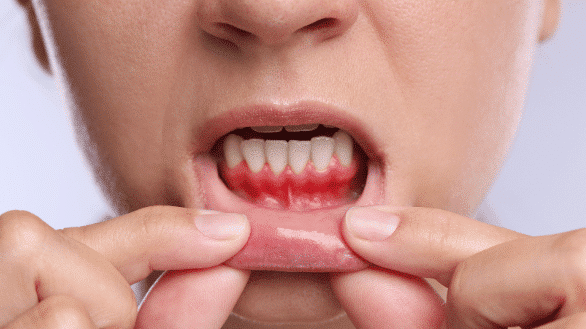
That’s the difficult part about periodontal disease. It rarely announces itself with pain. It progresses quietly. Bacterial biofilm accumulates along and below the gum line, triggering a chronic inflammatory response. Over weeks and months, that inflammation destroys the connective tissue attachment between your gums and teeth. Pockets deepen. Bone resorbs. And by the time you notice something feels off, the damage can be significant.
We don’t say that to scare anyone. We say it because catching periodontal disease early, or better yet, preventing it entirely, changes outcomes dramatically. Early-stage gingivitis is fully reversible with the right intervention. Moderate periodontitis can be managed and stabilized. Even advanced cases have treatment pathways that can preserve teeth and restore gum health when approached with the right combination of skill and consistency.
Our approach to periodontics is thorough but never cold. We take the time to explain what we’re seeing, why it matters, and what your options look like. We use precise diagnostic measurements, full-mouth periodontal probing, digital radiographs to assess bone levels, and clinical evaluation of tissue tone, bleeding on probing, and attachment loss, because accurate diagnosis drives effective treatment. But we also understand that hearing you have gum disease can feel overwhelming, and we walk through every step with you so nothing feels rushed or confusing.
Whether you’ve been referred to us for a specific periodontal concern, you noticed your gums bleeding and decided to look into it, or you’re coming in after years away from a dental chair, we’re genuinely glad you’re here. Gum health is recoverable. And the sooner we start, the more options you have.
Scaling and Root Planing
If your gums have started pulling away from your teeth and pocket depths are measuring beyond the healthy one-to-three-millimeter range, a standard cleaning isn’t enough anymore. That’s not a judgment on your home care. It’s a clinical reality. Once bacterial deposits migrate below the gum line and calcify into subgingival calculus, your toothbrush and floss simply cannot reach them. The infection lives in a place that only professional instrumentation can access.
Scaling and root planing, sometimes called deep cleaning, though that term undersells the precision involved, is the gold-standard non-surgical treatment for periodontitis. It’s the intervention we recommend most often at Tex Mabalon Dentistry for patients presenting with moderate pocket depths, clinical attachment loss, and radiographic evidence of early to moderate bone loss. And when performed at the right stage, it can halt disease progression and allow tissues to heal remarkably well.
Here’s what actually happens during the procedure. We work one quadrant or one half of the mouth at a time, depending on the extent of disease and your comfort. After administering local anesthesia so you’re completely numb and at ease, we use a combination of ultrasonic scalers and hand instruments, curettes specifically designed to adapt to root anatomy, to meticulously remove plaque, calculus, and bacterial toxins from the root surfaces below the gum line.
he scaling portion removes the deposits. The root planing portion smooths the root surface itself. This distinction matters. Rough, contaminated root surfaces give bacteria a foothold to recolonize. A smooth, clean root surface allows the gum tissue to reattach and tighten against the tooth, reducing pocket depth over time. We’re essentially creating the conditions your body needs to heal itself.
Most patients tolerate the procedure very well. You’ll feel pressure and vibration, but the anesthesia keeps discomfort minimal. Afterward, some sensitivity to temperature is normal for a week or two as the gums recover and shrink back against the teeth. We’ll give you clear aftercare guidance, gentle brushing techniques, antimicrobial rinses if indicated, and what to watch for during healing.
We typically see patients back four to six weeks after scaling and root planing to re-evaluate. We re-probe every site, compare measurements, and assess tissue response. Many patients see pocket depth reductions of one to two millimeters or more, along with significant improvement in bleeding on probing. For some sites, that’s enough. For others that haven’t responded adequately, we’ll discuss additional options, which might include localized antimicrobial therapy or, in certain cases, surgical intervention.
Patients across Sacramento come to us for scaling and root planing: from Curtis Park and Tahoe Park to Arden-Arcade and Pocket-Greenhaven. Some were told years ago they needed it and put it off. Some are finding out for the first time. Either way, we meet you where you are. This procedure is one of the most effective things we can do to save teeth that are at risk, and we take genuine satisfaction in watching patients’ gum health turn around after treatment.
Most Common Procedures
Here’s something we make sure every patient understands after completing scaling and root planing: the treatment doesn’t end when you leave the chair. Periodontal disease is a chronic condition. It can be controlled, managed, and kept in remission — but it doesn’t go away permanently. The bacterial populations that caused the initial infection will recolonize over time. The question is whether we stay ahead of them or let them gain ground again.
That’s what periodontal maintenance is for. It’s not the same as a routine prophylactic cleaning, even though it might look similar from the outside. A standard cleaning is preventive care for a healthy mouth. Periodontal maintenance is therapeutic care for a mouth that has a documented history of periodontitis. The distinction matters clinically, and it matters for your long-term outcomes.
At Tex Mabalon Dentistry, periodontal maintenance appointments are typically scheduled every three to four months. That interval isn’t arbitrary, it’s based on research showing that pathogenic bacterial populations in periodontal pockets reach destructive levels approximately 90 days after disruption. By seeing you on that cycle, we can disrupt recolonization before it causes new attachment loss or bone destruction.
During each maintenance visit, we perform a thorough periodontal assessment. That means full-mouth probing to track pocket depths over time, evaluation of bleeding on probing, assessment of tissue inflammation and recession, and comparison with your baseline measurements. We’re looking for stability, and we’re watching for any sites that show signs of recurrence so we can intervene early rather than reactively.
After the assessment, your hygienist performs scaling above and below the gum line, focusing on areas that tend to accumulate deposits faster. Every mouth has its trouble spots, the lingual surfaces of lower anteriors, the furcation areas of molars, sites adjacent to restorations. We know your mouth’s specific patterns because we track them visit after visit, and that familiarity allows us to be precise and efficient.
We also use each appointment as a chance to reinforce home care techniques. Not in a lecturing way — in a collaborative way. We might suggest a specific interdental brush size for a particular area, recommend a water flosser for hard-to-reach sites, or adjust your brushing technique to better address recession. Small changes at home compound over time, and we want you to feel empowered rather than dependent.
Patients sometimes ask whether they can eventually go back to twice-a-year cleanings. Honestly, for some patients with mild disease who maintain excellent home care and show consistently stable measurements over several years, we can sometimes extend the interval to four months. But for most patients with a periodontitis history, the three-to-four-month cycle is what keeps things stable. We’d rather see you a few extra times a year than watch hard-won progress unravel.
We have patients from all over Sacramento who’ve been on periodontal maintenance with us for years. Midtown residents who walk to their appointments. Families in Natomas and Elk Grove who drive in because they trust the continuity of care. What they all have in common is that their gum health has remained stable because they committed to the process. That’s something we never take for granted, and we make sure they know we appreciate it.
When non-surgical treatment isn’t enough to resolve periodontal disease — when pockets remain deep despite thorough scaling and root planing, when bone defects are contributing to ongoing attachment loss, or when the tissue architecture itself is preventing adequate healing — surgical intervention becomes the next step. And at Tex Mabalon Dentistry, we’re able to offer laser gum surgery as a modern, minimally invasive alternative to traditional scalpel-and-suture periodontal surgery.
Laser-assisted periodontal therapy uses focused light energy to selectively remove diseased tissue, eliminate bacterial colonies within periodontal pockets, and stimulate the body’s natural regenerative processes. The precision of the laser allows us to target infected and inflamed tissue while preserving healthy tissue adjacent to it — something that’s much harder to achieve with a conventional surgical approach. The result is less tissue removal, less bleeding, less post-operative discomfort, and faster healing times.
Here’s how the procedure works in practical terms. After ensuring you’re thoroughly numb and comfortable, we introduce a thin fiber-optic laser tip into the periodontal pocket. The laser energy vaporizes the diseased epithelial lining of the pocket and kills the bacteria living within it. We then perform careful root surface debridement to remove any remaining calculus and toxins. The laser is used again to create a stable fibrin clot at the surgical site, essentially a biological seal that protects the area and promotes reattachment of the gum tissue to the root surface.
Because the laser cauterizes as it works, there’s significantly less bleeding during and after the procedure compared to traditional flap surgery. Most patients don’t need sutures. Swelling is minimal. And while we still recommend taking it easy for a day or two afterward, the recovery experience is markedly gentler than what patients expect when they hear the word “surgery.”
We want to be straightforward about something, though. Laser gum surgery isn’t the right solution for every patient or every clinical scenario. Severe horizontal bone loss, certain tooth anatomies, and specific defect patterns may still require conventional surgical approaches: osseous surgery, guided tissue regeneration, or bone grafting procedures. During your evaluation, we assess your specific situation thoroughly and recommend the approach that gives you the best chance at a stable, long-term result. We’d never choose a technique because it sounds appealing and skip one that would actually serve you better.
That said, for the patients who are good candidates, and many are, laser gum surgery represents a genuine advancement in how we treat periodontal disease. Patients who were hesitant about traditional surgery often feel much more comfortable moving forward when they understand the reduced invasiveness of the laser approach. And we’ve seen excellent clinical outcomes: pocket depth reduction, improved attachment levels, and tissue that looks and feels healthy again.
Patients come to us for laser gum surgery from across the Sacramento region: Land Park, East Sacramento, Arden-Arcade, Carmichael, Rancho Cordova, and beyond. Some have been managing periodontal disease for years and are ready for a more definitive solution. Others are newly diagnosed with advanced disease and want to explore every option before committing to a treatment plan. Whatever brought you here, we’ll give you an honest assessment and a clear explanation of what laser surgery can and can’t do for your specific situation.
If you’ve been told you need gum surgery and you’re not sure where to start, or if you’ve been living with deep pockets and bleeding gums and you know something needs to change, we’d welcome the chance to sit down with you. At Tex Mabalon Dentistry, we treat periodontal disease with the precision it demands and the warmth every patient deserves. Your gums have a story to tell, and we’re here to listen, and to help you write a healthier next chapter.
Frequently Asked Questions:
How do I know if I have gum disease?
Bleeding when you brush is one of the most common early signs. Gum disease often has no pain at all, which is why so many people miss it. Other signs include swollen gums, bad breath that won’t go away, or teeth that feel loose. If you notice any of these, come in and get checked before it progresses.
Do Sacramento’s dry summers affect gum health?
Yes, dry conditions can contribute to dry mouth, which reduces saliva flow. Saliva helps protect your gums and teeth from bacteria. Sacramento summers are hot and dry, and many patients here don’t drink enough water during those months. Staying hydrated and keeping up with regular periodontal visits helps offset that risk significantly.
What should I expect at my first periodontal visit in Sacramento?
Your first visit includes a full gum evaluation. We measure your gum pockets with a small probe, healthy pockets are one to three millimeters. We also review your X-rays and look for bone loss. You’ll leave with a clear picture of your gum health and a treatment plan if anything needs attention. No guessing, just straight answers.
Is periodontal treatment painful?
Most patients are surprised by how manageable it is. We use local anesthetic for any deeper procedures like scaling and root planing. You may feel some soreness afterward, but it typically fades within a day or two. Patients from Midtown and East Sacramento who put off coming in often tell us they wish they hadn’t waited as long as they did.
How often do I need to come in for periodontal maintenance?
It depends on your history. Most patients with gum disease come in every three to four months instead of the standard twice a year. That interval is based on how quickly buildup returns for you specifically. Staying on schedule keeps gum disease from progressing and protects the bone and tissue we’ve worked to stabilize.
Why Choose Dr. Tex Mabalon?
At Tex Mabalon Dentistry, we want to be the Dentist that helps you keep your smile for a lifetime. Gums are the foundation of your teeth, and if the foundation isn’t strong, the rest of the house will eventually fall. Whether you’ve noticed your gums are receding or they just feel “tender” when you eat, don’t wait. We’ve been helping the Sacramento community for years and we know how to handle these issues without making you feel bad about your dental history.
Here’s what sets us apart:
Choosing Dr. Tex means choosing a dental team that truly cares about restoring your health, function, and confidence.
New Patient Info
Ready to Love Your Smile Again?
At Dr. Tex Mabalon Cosmetic & Implant Dentistry, we love nothing more than helping patients achieve their dream smile. If you’re interested in learning about what cosmetic dentistry options may be available to you, call us today and schedule a consultation. We’ll discuss your vision for your smile and then work together to come up with a plan that will help make it happen. We’ll give you a reason to smile!