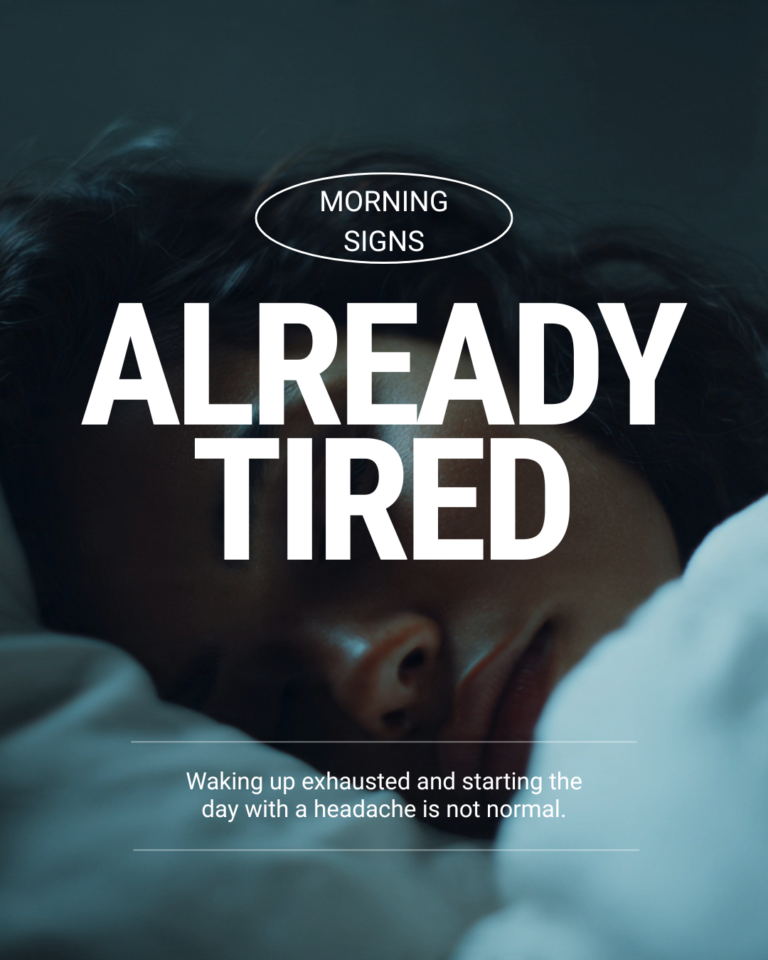


Waking up with a headache and a foggy head after a full night’s sleep is not something you have to accept. Here is what those morning symptoms often mean, what the research shows, and the next steps that actually help.
You set your alarm, get a full night’s sleep, and still wake up with a pounding head and a mind that feels wrapped in cotton. If you wake up with a headache and brain fog most mornings, those are not just annoyances. They are signals. Morning headaches, brain fog, and unrefreshing sleep often overlap because they can share a single underlying cause, and the message is worth listening to.
This article answers the most common questions people have about these overlapping symptoms, what the research says, and what meaningful next steps look like.
Why do I wake up with a headache almost every morning?
Waking up with a headache most often points to sleep-disordered breathing, teeth grinding, poor sleep posture, dehydration, or medication overuse, and the timing is a key clue. Morning headaches are more common than most people realize, and they rarely have just one cause. The International Headache Society recognizes sleep-related headache as a distinct category.
One of the most overlooked causes is sleep-disordered breathing. A study published in Cephalalgia found that people with obstructive sleep apnea (OSA) were significantly more likely to report morning headaches than those without the condition, largely due to repeated drops in blood oxygen during the night (Kristiansen et al., 2012). Other common contributors include:
- Teeth grinding (bruxism) overnight
- Poor sleep posture causing cervicogenic neck tension
- Dehydration
- Medication overuse headache
The pattern matters. If your headaches appear specifically in the morning and ease within an hour or two of getting up, that timing is a clinical clue worth exploring.
What is brain fog, and why does it follow poor sleep so closely?
Brain fog is a cluster of symptoms, including difficulty concentrating, slow thinking, forgetfulness, and mental fatigue, and it follows poor sleep because both stem from disrupted neurological recovery. Brain fog is not a formal diagnosis, but it describes a very real experience.
During deep non-REM sleep, the brain’s glymphatic system activates and clears out metabolic waste products, including proteins linked to cognitive decline (Jessen et al., 2015). When sleep is fragmented or shallow, that clearing process is incomplete. The result is a brain that is, in a literal sense, running on the residue of the previous day.
Research published in PNAS found that even a single night of sleep deprivation measurably increased amyloid-beta accumulation in the human brain (Shokri-Kojori et al., 2018). For people with chronically poor sleep, the cognitive effects compound over time, making brain fog feel less like an occasional inconvenience and more like a permanent state.
Could an undiagnosed sleep disorder be behind all three symptoms at once?
Yes. Obstructive sleep apnea can cause morning headaches, non-restorative sleep, and daytime brain fog all at once, and roughly 80% of moderate to severe cases go undiagnosed. OSA is one of the most underdiagnosed conditions in adults worldwide, and its hallmark presentation includes exactly this triad: morning headaches from overnight oxygen drops, unrefreshing sleep, and cognitive impairment during the day.
The American Academy of Sleep Medicine estimates that approximately 80% of moderate to severe OSA cases remain undiagnosed (Young et al., 2002). Many people with OSA do not know they stop breathing repeatedly during the night. A partner might notice snoring or gasping, but the person waking up exhausted often blames stress or aging rather than a treatable condition.
Other sleep disorders worth considering include upper airway resistance syndrome (UARS), which produces similar symptoms without dramatic apnea events, and circadian rhythm disruption, which can cause persistent sleep fragmentation even when total sleep time looks normal.
Sleep quality vs. sleep quantity: which one matters more?
Both matter, but sleep quality has the stronger short-term impact on how you feel. Someone sleeping nine hours but waking every 90 minutes will function worse the next day than someone who sleeps a solid, uninterrupted six and a half hours.
Sleep architecture is the key concept. Healthy sleep cycles through light sleep, deep slow-wave sleep, and REM sleep in roughly 90-minute intervals. Deep sleep is when physical restoration happens. REM sleep is when emotional memory consolidation and mental recovery occur. If either stage is consistently cut short or skipped, the downstream effects show up as fatigue, mood instability, and the cognitive slowness that brain fog describes.
A useful self-check: do you wake at the same time every night? Do you feel most alert only after noon? These patterns often reflect specific disruptions in sleep architecture rather than simply not sleeping enough.
Can lifestyle habits alone cause these symptoms, or is something more going on?
Lifestyle is a legitimate contributor, but it is rarely the complete picture when symptoms are consistent and daily.
High evening screen exposure suppresses melatonin and delays sleep onset (Chang et al., 2015). Alcohol, though sedating at first, fragments sleep in the second half of the night. Caffeine after 2 PM measurably reduces deep sleep even in people who feel they have built a tolerance (Drake et al., 2013). Late or heavy meals near bedtime raise core body temperature, working against the cooling the body needs to enter deep sleep.
That said, if you have already cleaned up your sleep hygiene and still wake with a headache and brain fog, lifestyle is probably not the root cause. At that point, a clinical evaluation is the logical next step.
What does the research say about ignoring these symptoms long term?
Chronic poor sleep is linked to significantly higher risks of cardiovascular disease, metabolic dysfunction, and accelerated cognitive aging. The evidence is clear and worth taking seriously (Grandner, 2017). Untreated sleep apnea specifically raises the risk of hypertension, stroke, and type 2 diabetes.
On the cognitive side, a 25-year longitudinal study in Nature Communications found that consistently sleeping six hours or fewer per night in midlife was associated with a 30% higher risk of developing dementia later in life (Sabia et al., 2021). Morning headaches and brain fog may feel like minor daily inconveniences, but their chronic presence can indicate an underlying process that compounds silently over years. Early evaluation and treatment, when a disorder is present, changes long-term outcomes in measurable ways.
What kind of specialist should I see, and what happens during an evaluation?
Start with a sleep medicine physician if you suspect a sleep disorder, a neurologist if headaches dominate, and add bloodwork if brain fog is the main concern. The right starting point depends on your primary symptom.
A sleep medicine physician can order a home sleep test or an in-lab polysomnography to measure your breathing, oxygen levels, brain waves, and movement through the night. A neurologist can assess whether headaches are tension-type, cervicogenic, or migraine-related, and whether sleep disruption is a trigger or a consequence. For brain fog that significantly affects daily life, a comprehensive evaluation may also check thyroid function, vitamin deficiencies, and inflammatory markers, since these overlap heavily with sleep-related cognitive symptoms.
The process is usually straightforward. A sleep study is non-invasive, and results often provide a clear starting point for treatment that patients describe as genuinely life-changing.
If a sleep disorder is found, what does treatment look like?
Treatment depends on the diagnosis, but most sleep disorders respond well to the right intervention.
For obstructive sleep apnea, CPAP (continuous positive airway pressure) therapy remains the gold standard. Adherent CPAP users consistently report dramatic reductions in morning headaches, improved daytime alertness, and significant gains in cognitive clarity within weeks of starting treatment (Barbe et al., 2012). For those who cannot tolerate CPAP, alternatives include oral appliance therapy, positional therapy, and in some cases surgery.
For insomnia-related brain fog and fragmented sleep, cognitive behavioral therapy for insomnia (CBT-I) is recommended by the American College of Physicians as a first-line treatment, often outperforming sleep medications in long-term outcomes (Qaseem et al., 2016). The common thread: once the root cause is addressed, the morning headaches, the fog, and the fatigue often resolve without additional interventions.
You do not have to accept waking up this way
Feeling foggy, headachy, and drained every morning is not just part of getting older or a byproduct of a busy life. For many people, it reflects something specific and addressable happening during the night.
If you have been tolerating these symptoms and attributing them to stress or poor habits, it may be time to take a closer look. A sleep evaluation is one of the highest-return investments you can make in your long-term health and daily quality of life. If morning headaches, poor sleep, or brain fog are affecting your daily life, speaking with a sleep specialist is a meaningful first step. A proper evaluation takes the guesswork out and puts you on a path toward real answers.
Frequently Asked Questions
Why do I wake up with a headache every morning?
Morning headaches most often come from sleep-disordered breathing such as sleep apnea, teeth grinding, poor sleep posture, dehydration, or medication overuse. A telling clue is timing: if the headache appears on waking and eases within an hour or two, that pattern points toward an overnight cause worth investigating.
Can poor sleep cause brain fog?
Yes. During deep sleep the brain’s glymphatic system clears metabolic waste. When sleep is fragmented or shallow, that clearing is incomplete, which produces the difficulty concentrating, slow thinking, and mental fatigue that brain fog describes. Even one night of poor sleep measurably impairs next-day cognition.
Can sleep apnea cause both morning headaches and brain fog?
Yes. Obstructive sleep apnea commonly causes morning headaches from overnight drops in blood oxygen, non-restorative sleep, and daytime cognitive impairment, so all three symptoms can share one underlying cause. An estimated 80 percent of moderate to severe cases remain undiagnosed.
What matters more, sleep quality or sleep quantity?
Both matter, but quality has the stronger short-term effect. Someone sleeping nine hours with repeated awakenings often functions worse than someone who sleeps a solid six and a half. Fragmented sleep that cuts short deep and REM stages drives fatigue, mood swings, and brain fog.
When should I see a doctor about morning headaches and brain fog?
See a specialist if the symptoms are daily, persist after you improve your sleep habits, or interfere with daily life. A sleep medicine physician can order a home sleep test or in-lab study. A neurologist can classify the headaches, and bloodwork can rule out thyroid, vitamin, or inflammatory causes.
What kind of doctor treats sleep-related headaches and brain fog?
Start with a sleep medicine physician if you suspect a sleep disorder; they can order a sleep study. See a neurologist if headaches are the dominant symptom. For brain fog affecting daily life, a broader workup may add thyroid function, vitamin levels, and inflammatory markers.
Does treating a sleep disorder get rid of morning headaches and brain fog?
Often, yes. For sleep apnea, adherent CPAP users report sharp reductions in morning headaches and clear gains in daytime alertness within weeks. For insomnia, cognitive behavioral therapy (CBT-I) is a first-line treatment. Once the root cause is addressed, the headaches, fog, and fatigue frequently resolve.
What happens if I ignore chronic poor sleep?
Chronic poor sleep raises the risk of cardiovascular disease, metabolic dysfunction, and accelerated cognitive aging. One long-term study linked consistently sleeping six hours or fewer in midlife to a 30 percent higher risk of dementia. Persistent morning headaches and brain fog can signal a process that compounds over years.
{ “@context”: “https://schema.org”, “@graph”: [ { “@type”: “MedicalWebPage”, “@id”: “https://[YOURDOMAIN].com/morning-headaches-brain-fog/#webpage”, “url”: “https://[YOURDOMAIN].com/morning-headaches-brain-fog/”, “name”: “Morning Headaches and Brain Fog: Why You Wake Up Feeling Worse Than You Should”, “description”: “Waking up with a headache and brain fog after a full night’s sleep? Learn the sleep-related causes, what the research shows, and when to see a specialist.”, “inLanguage”: “en-US”, “datePublished”: “[YYYY-MM-DD]”, “dateModified”: “[YYYY-MM-DD]”, “lastReviewed”: “[YYYY-MM-DD]”, “medicalAudience”: { “@type”: “MedicalAudience”, “audienceType”: “Patient” }, “about”: [ { “@type”: “MedicalSymptom”, “name”: “Morning headache” }, { “@type”: “MedicalSymptom”, “name”: “Brain fog” }, { “@type”: “MedicalCondition”, “name”: “Obstructive Sleep Apnea”, “alternateName”: [“Sleep Apnea”, “OSA”] } ], “reviewedBy”: { “@type”: “Person”, “name”: “[Reviewing Clinician Name]”, “honorificSuffix”: “[MD / DO / RPSGT]” }, “author”: { “@type”: “Person”, “name”: “[Author Name]” }, “publisher”: { “@type”: “Organization”, “name”: “[Publisher Name]”, “logo”: { “@type”: “ImageObject”, “url”: “https://[YOURDOMAIN].com/logo.png” } } }, { “@type”: “FAQPage”, “@id”: “https://[YOURDOMAIN].com/morning-headaches-brain-fog/#faq”, “mainEntity”: [ { “@type”: “Question”, “name”: “Why do I wake up with a headache every morning?”, “acceptedAnswer”: { “@type”: “Answer”, “text”: “Morning headaches most often come from sleep-disordered breathing such as sleep apnea, teeth grinding, poor sleep posture, dehydration, or medication overuse. A telling clue is timing: if the headache appears on waking and eases within an hour or two of getting up, that pattern points toward an overnight cause worth investigating.” } }, { “@type”: “Question”, “name”: “Can poor sleep cause brain fog?”, “acceptedAnswer”: { “@type”: “Answer”, “text”: “Yes. During deep sleep the brain’s glymphatic system clears metabolic waste. When sleep is fragmented or shallow, that clearing is incomplete, which produces the difficulty concentrating, slow thinking, and mental fatigue that brain fog describes. Even one night of poor sleep measurably impairs next-day cognitive performance.” } }, { “@type”: “Question”, “name”: “Can sleep apnea cause both morning headaches and brain fog?”, “acceptedAnswer”: { “@type”: “Answer”, “text”: “Yes. Obstructive sleep apnea commonly causes morning headaches from overnight drops in blood oxygen, non-restorative sleep, and daytime cognitive impairment, so all three symptoms can share one underlying cause. An estimated 80 percent of moderate to severe cases remain undiagnosed.” } }, { “@type”: “Question”, “name”: “What matters more, sleep quality or sleep quantity?”, “acceptedAnswer”: { “@type”: “Answer”, “text”: “Both matter, but quality has the stronger short-term effect on how you feel. Someone sleeping nine hours with repeated awakenings often functions worse than someone who sleeps a solid six and a half. Fragmented sleep that cuts short deep and REM stages drives fatigue, mood swings, and brain fog.” } }, { “@type”: “Question”, “name”: “When should I see a doctor about morning headaches and brain fog?”, “acceptedAnswer”: { “@type”: “Answer”, “text”: “See a specialist if the symptoms are daily, persist after you improve your sleep habits, or interfere with daily life. A sleep medicine physician can order a home sleep test or in-lab study. A neurologist can classify the headaches, and bloodwork can rule out thyroid, vitamin, or inflammatory causes of brain fog.” } }, { “@type”: “Question”, “name”: “What kind of doctor treats sleep-related headaches and brain fog?”, “acceptedAnswer”: { “@type”: “Answer”, “text”: “Start with a sleep medicine physician if you suspect a sleep disorder; they can order a sleep study. See a neurologist if headaches are the dominant symptom. For brain fog affecting daily life, a broader workup may add thyroid function, vitamin levels, and inflammatory markers.” } }, { “@type”: “Question”, “name”: “Does treating a sleep disorder get rid of morning headaches and brain fog?”, “acceptedAnswer”: { “@type”: “Answer”, “text”: “Often, yes. For sleep apnea, adherent CPAP users report sharp reductions in morning headaches and clear gains in daytime alertness within weeks. For insomnia, cognitive behavioral therapy (CBT-I) is a first-line treatment. Once the root cause is addressed, the headaches, fog, and fatigue frequently resolve.” } }, { “@type”: “Question”, “name”: “What happens if I ignore chronic poor sleep?”, “acceptedAnswer”: { “@type”: “Answer”, “text”: “Chronic poor sleep raises the risk of cardiovascular disease, metabolic dysfunction, and accelerated cognitive aging. One long-term study linked consistently sleeping six hours or fewer in midlife to a 30 percent higher risk of dementia. Persistent morning headaches and brain fog can signal a process that compounds silently over years.” } } ] } ] }