

Millions of people live with obstructive sleep apnea and have no idea. Here is why the condition stays hidden for so long, the signs that get dismissed, and what finally getting an answer looks like.
Undiagnosed sleep apnea is more common than most people realize. You snore. You wake up tired no matter how long you sleep. You push through the afternoon on caffeine and willpower. Most people blame stress, aging, or a busy schedule. But those same complaints are the defining symptoms of obstructive sleep apnea (OSA), a condition that stops your breathing dozens or even hundreds of times a night.
For many patients, the gap between the first symptoms and a formal diagnosis averages nearly a decade. That delay has real consequences. This article explains why sleep apnea is so consistently missed, why some groups are far harder to diagnose, and what the path to a real answer actually looks like.
What is sleep apnea, and why is it dangerous?
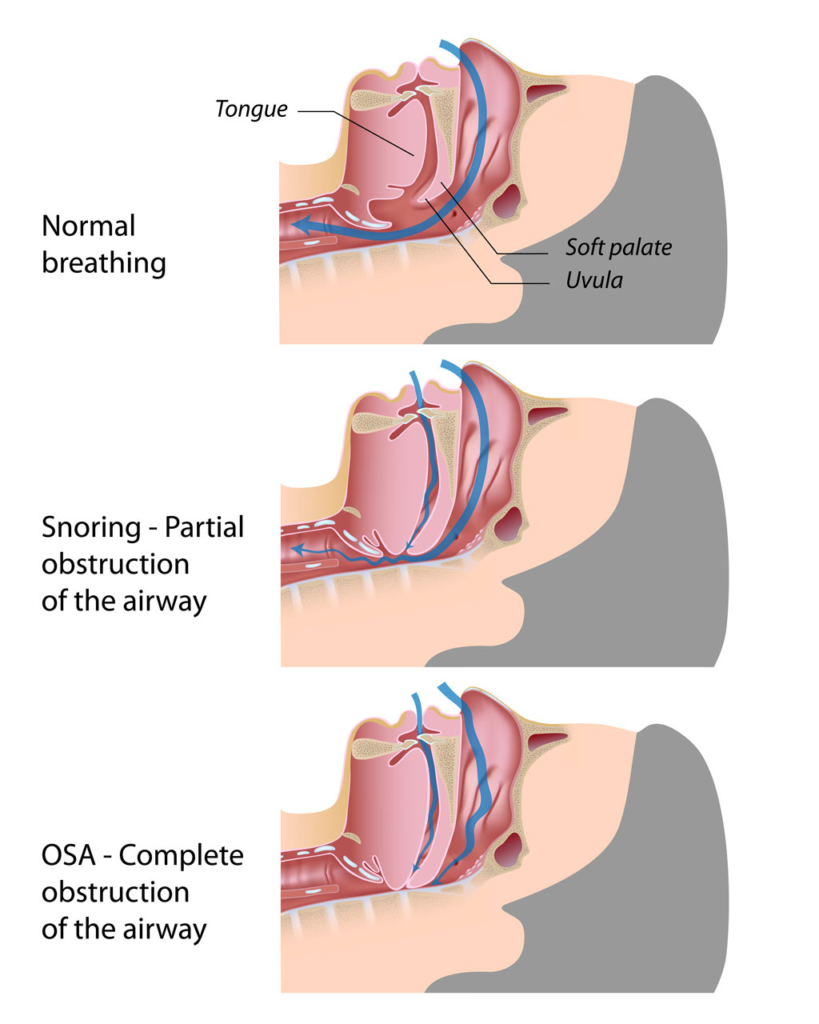
Sleep apnea is a disorder in which the airway repeatedly collapses or becomes blocked during sleep, pausing breathing for a few seconds to over a minute at a time. The brain briefly wakes the body just enough to restore breathing, but these micro-arousals are so short that the person rarely remembers them. The cycle can repeat 30, 60, or even 100 times an hour.
The danger goes well beyond disrupted sleep. Each apnea event triggers a stress response that floods the body with cortisol and adrenaline, spikes blood pressure, and drops blood-oxygen levels. Over time, this nightly strain contributes to hypertension, irregular heart rhythms, insulin resistance, and increased stroke risk (Punjabi, 2008). What looks like a snoring problem on the surface is placing sustained physiological stress on the cardiovascular system every single night.
Why does sleep apnea go undiagnosed for so long?
Sleep apnea goes undiagnosed because its core events happen while you are unconscious, its symptoms mimic everyday problems, and it is rarely screened for in routine checkups. These factors compound, which makes early detection genuinely difficult.
The most fundamental problem is that the disorder happens during sleep. Unlike chest pain or a visible rash, the defining events are invisible to the person living through them. Patients never feel themselves stop breathing. What they feel is the aftermath: fatigue, morning headaches, trouble concentrating, and irritability, symptoms that map easily onto a dozen other explanations.
Research published in Sleep Medicine found that the average time from symptom onset to formal diagnosis exceeded seven years in a substantial share of patients (Jennum & Riha, 2009). Primary-care visits during that window often address each complaint in isolation, treating the headache, the fatigue, and the mood separately, without connecting them to a single underlying cause.
There is also a screening gap. Sleep apnea is not routinely checked during standard annual physicals, and many providers do not ask the specific questions that would flag it.
How long can sleep apnea go undiagnosed?
Sleep apnea commonly goes undiagnosed for seven to ten years after symptoms begin. During that window most people develop at least one related condition, such as high blood pressure, depression, cognitive complaints, or persistent fatigue they have learned to accept as normal. The delay is longest for people whose symptoms do not match the stereotypical profile and for those who sleep alone.
What are the signs of sleep apnea that people miss?
The signs of sleep apnea are easy to dismiss because they overlap with ordinary tiredness and stress. The most commonly overlooked signs include:
- Loud, chronic snoring, often with gasping or choking sounds
- Waking up unrefreshed no matter how many hours you slept
- Morning headaches
- Daytime fatigue, brain fog, and trouble concentrating
- Irritability, low mood, or anxiety
- Waking to urinate multiple times a night
- Dry mouth or sore throat on waking
Individually, each of these looks like something else. Together, they form a pattern that points toward the airway, not toward stress or aging.
Does sleep apnea look different in women, children, and older adults?
Yes. Sleep apnea presents very differently across groups, and the less obvious presentations are the ones most often missed.
The classic image is an overweight, middle-aged man who snores loudly and dozes off in chairs. That profile is real, but it excludes huge portions of the affected population.
Women with sleep apnea more often report insomnia, fatigue, depression, and morning headaches than obvious snoring, so they are frequently diagnosed with anxiety or a mood disorder first (Theorell-Haglow et al., 2018). Older adults may present with cognitive complaints that resemble early dementia. Thinner people without the expected body type are often never considered candidates at all.
Children are another commonly missed group. Pediatric sleep apnea often shows up as behavioral problems, hyperactivity, poor school performance, and bedwetting rather than classic sleepiness, which leads to misdiagnosis as an attention disorder (Marcus et al., 2012). Clinicians who watch only for the obvious presentation will miss a significant share of cases.
Why is sleep apnea harder to catch if you sleep alone?
People who sleep alone are diagnosed later because there is no bed partner to witness the snoring, gasping, or breathing pauses. For many patients, a partner is the first to recognize something is wrong, and witnessed apneas are among the strongest predictors of a confirmed diagnosis (Cartwright, 2008).
Without a witness, the events of the night go entirely unobserved. These individuals rely only on daytime symptoms to prompt action, and because those symptoms are so easily blamed on other causes, they may wait years before anyone connects the dots. People who live alone, travel frequently, or have recently gone through a separation are statistically at higher risk of delayed diagnosis. It is one of the quieter inequities in how sleep apnea gets caught.
What conditions is sleep apnea mistaken for?
Sleep apnea is commonly misdiagnosed as depression, anxiety, thyroid disorders, anemia, migraine, or perimenopause because its symptoms overlap with all of them.
Fatigue and mental slowing trigger workups for thyroid problems, anemia, and depression. Morning headaches get treated as tension or migraine headaches without investigating the source. Mood swings and irritability get attributed to anxiety or relationship stress. In women especially, symptoms appearing during perimenopause are often folded into hormonal explanations rather than prompting a sleep study (Hachul et al., 2013).
The complication is that many of these conditions genuinely coexist with sleep apnea. Depression is more prevalent in people with untreated OSA. Hypertension is both a consequence and a risk factor. That overlap leads providers to treat what they can see while the sleep disorder keeps operating underneath, sustaining or worsening the very conditions being managed. Treatment-resistant depression in particular has been flagged as a marker of undiagnosed sleep apnea, since antidepressants do little to address oxygen deprivation as the real driver of low mood and energy (Edwards et al., 2015).
What are the risk factors for sleep apnea?
Key risk factors for sleep apnea include obesity, a narrow or crowded airway, a thick neck, family history, alcohol use, smoking, postmenopausal status, and type 2 diabetes. Awareness of these factors can meaningfully shorten the time to diagnosis.
Anatomy carries significant weight. A narrow airway, large tonsils, a recessed jaw, or a thick neck circumference (over 17 inches in men, over 16 inches in women) all raise risk. Nasal obstruction from a deviated septum or chronic congestion adds to it by creating negative pressure in the throat during sleep. Beyond anatomy, the following are well-established predictors:
- Obesity, especially central abdominal fat that presses on the diaphragm
- Family history of sleep apnea, suggesting an inherited airway anatomy
- Regular alcohol use, which relaxes throat muscles and worsens airway collapse
- Postmenopausal status in women, as estrogen and progesterone appear to protect airway muscle tone
- Smoking, which increases airway inflammation and fluid retention in the throat
- Type 2 diabetes and metabolic syndrome, which share a bidirectional relationship with OSA (Reutrakul & Van Cauter, 2014)
Knowing these risk factors does not replace a diagnosis, but it gives both patients and clinicians a clearer reason to ask the right questions.
How is sleep apnea diagnosed?
Sleep apnea is diagnosed with a sleep study, either an in-lab polysomnography (PSG) or a home sleep apnea test (HSAT). The process is simpler than most people expect, and saying so matters, because that expectation is a common barrier to seeking help.
In-lab polysomnography is the gold standard. Conducted overnight at a sleep center, it simultaneously measures brain activity, oxygen levels, heart rate, breathing patterns, and limb movement. The data is comprehensive and allows precise characterization of the disorder.
A home sleep apnea test is the alternative for straightforward cases. It is a compact device worn during a normal night at home that measures airflow, respiratory effort, and oxygen saturation. For moderate to severe OSA without complicating factors, home testing is validated as clinically equivalent to in-lab studies for diagnosis (Collop et al., 2007).
Results are typically available within days. The evaluation is non-invasive, involves no needles or procedures, and the home version does not even require an overnight clinic visit. The barrier to getting evaluated is genuinely low, which makes prolonged delay harder to justify once a person understands what is involved.
Does treating sleep apnea actually help?
Yes. Treating sleep apnea often produces dramatic improvements in energy, mood, focus, and blood pressure within weeks to months. For people who spent years sleeping poorly without knowing why, effective treatment is often described as one of the most significant health changes they have ever experienced.
CPAP therapy, which delivers a gentle stream of pressurized air to keep the airway open during sleep, remains the most effective and most studied treatment for OSA. Adherent CPAP users consistently report elimination or sharp reduction of morning headaches, improved daytime alertness, sharper thinking, better mood stability, and lower blood pressure (Barbe et al., 2012).
For those who cannot tolerate CPAP, alternatives include mandibular advancement devices (custom oral appliances that reposition the jaw), positional therapy for people whose apnea occurs mainly on their back, and surgical options ranging from minimally invasive upper-airway procedures to more involved anatomical corrections.
The key point: undiagnosed sleep apnea is not a stable situation. Left untreated, the condition typically worsens over time, and so do its downstream effects on the heart, brain, and metabolism. A diagnosis is the beginning of a reversal, not just a label.
The decade you should not have to lose
Seven to ten years is a long time to live with something both diagnosable and treatable. In that window, most people have already developed at least one related condition, whether hypertension, depression, cognitive complaints, or fatigue they have simply learned to accept.
Sleep apnea does not announce itself. It operates at night, borrows the appearance of other problems, and waits for someone to ask the right question. The good news is that once the question is asked and the evaluation is done, the path forward is usually clear and the results are real.
Persistent fatigue, morning headaches, and poor concentration are not normal baselines. If they have been your reality for years, a sleep evaluation is one of the most direct steps you can take toward understanding why, and changing it. If you recognize yourself in these symptoms, or see someone in your life in this picture, a conversation with a sleep specialist is where the answers begin.
- Punjabi, N. M. (2008). The epidemiology of adult obstructive sleep apnea. Proceedings of the American Thoracic Society, 5(2), 136–143. https://doi.org/10.1513/pats.200709-155MG