

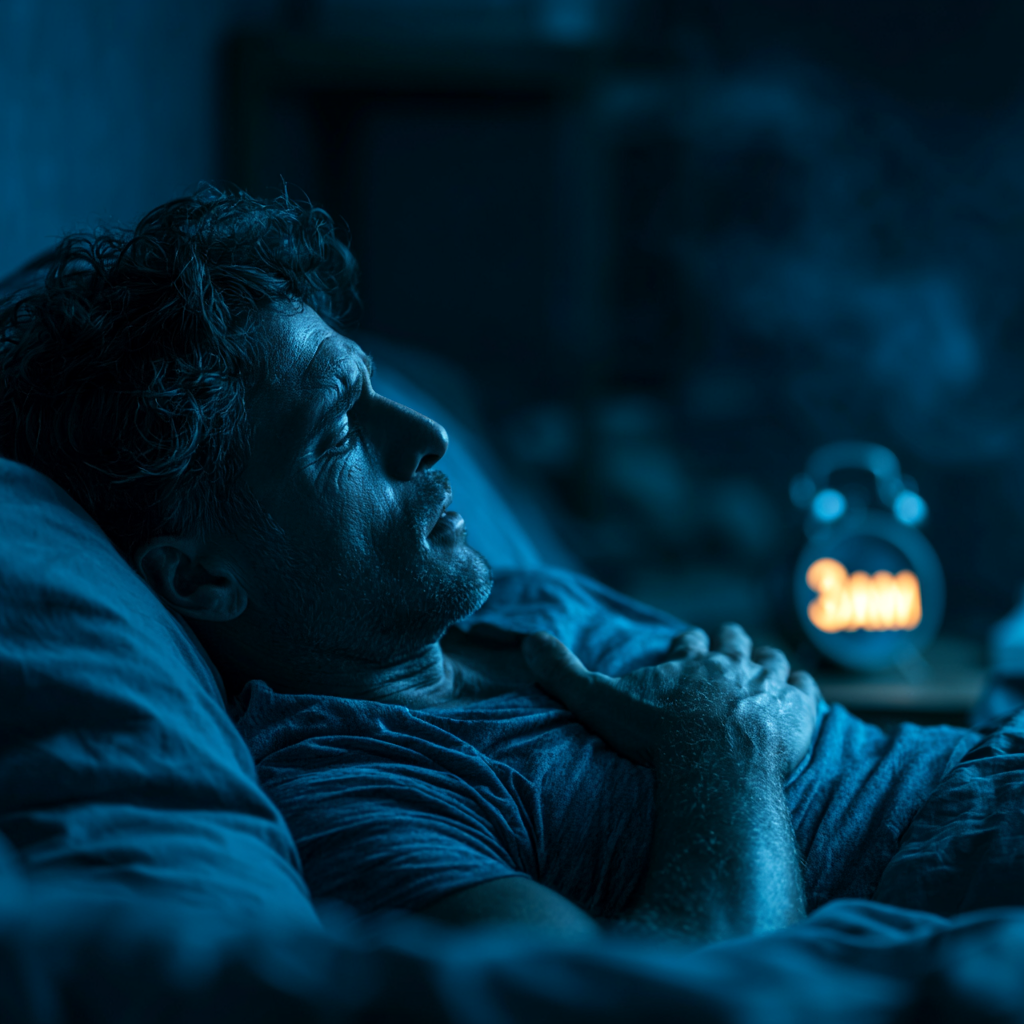
Waking up drenched and exhausted is more than just discomfort. It could be a sign your airway is working against you all night long.
You pull back the covers in the middle of the night, shirt soaked, heart racing, mind foggy. Maybe you chalk it up to a warm room or a stressful week. But when it keeps happening, night after night, your body may be signaling something deeper than temperature regulation.
Night sweats and restless sleep are among the most overlooked and misattributed symptoms of sleep apnea. Most people associate sleep apnea with loud snoring and daytime fatigue, which are real symptoms, but the condition produces a far wider range of signs that often get dismissed or blamed on something else entirely.
This article walks through what the research says about the connection between night sweats, restless sleep, and sleep apnea, and what you can do if this pattern sounds familiar.
Night Sweats, Restless Sleep, and Sleep Apnea
What exactly are night sweats, and how common are they?
Night sweats refer to episodes of heavy sweating during sleep that are not explained by an overly warm environment or too many blankets. They are drenching enough to soak through clothing and bedding, and they occur regardless of room temperature.
They are more common than most people realize. A study published in the Annals of Family Medicine found that 41% of patients presenting to a primary care clinic reported experiencing night sweats in the past month (Mold et al., 2002). Despite how frequently they occur, the underlying cause often goes unidentified because night sweats have a broad range of potential triggers, from hormonal shifts to infections to sleep disorders.
What does sleep apnea have to do with night sweats?
The connection is more direct than most people expect. When the airway collapses during an apnea event, oxygen levels in the blood fall and carbon dioxide builds up. The brain responds by triggering a stress response that releases adrenaline and activates the sympathetic nervous system.
This fight-or-flight activation causes the heart rate to spike, blood pressure to rise, and the body to generate heat. Sweating is the body’s attempt to cool itself down during that surge. Research has confirmed the link: people with obstructive sleep apnea (OSA) are significantly more likely to report night sweats than those without the condition — more than three times as likely, according to the same Mold et al. study.
The sweating is not random. It is a physiological response to the repeated micro-crises your body is managing while you sleep.
Why does sleep apnea make sleep so restless?
Restless sleep in the context of sleep apnea is largely driven by fragmentation. Each time breathing stops, even for just a few seconds, the brain initiates an arousal to restore normal breathing. These arousals often do not fully wake you, but they pull you out of the deeper, more restorative stages of sleep.
The result is a night that looks adequate on paper but leaves you feeling like you barely slept. You may toss and turn, kick your legs, change positions repeatedly, or wake multiple times without understanding why. This constant cycling out of deep sleep prevents the body from reaching the slow-wave and REM sleep stages where physical repair, memory consolidation, and hormonal regulation occur (Tasali & Ip, 2008).
Over time, this fragmentation builds into a serious sleep debt that no amount of extra time in bed can fully repay.
Could Night Sweats and Restless Sleep Be Caused by Something Else?
Absolutely, and ruling out other causes is part of a thorough clinical evaluation. The most common alternative explanations include:
- Hormonal changes: Menopause is one of the most frequent causes of night sweats in women. Declining estrogen levels disrupt the body’s thermoregulatory system, triggering hot flashes that extend into sleep. Notably, menopause also independently increases the risk of OSA, so both conditions can coexist (Polo-Kantola et al., 1999).
- Infections and illness: Tuberculosis, HIV, and other infections are historically associated with night sweats. Autoimmune conditions and certain cancers can also produce them.
- Medications: Antidepressants, particularly SSRIs and SNRIs, are known to cause night sweats as a side effect. So are some blood pressure medications, steroids, and diabetes drugs.
- Anxiety and stress: The same sympathetic nervous system activation that drives apnea-related sweating can be triggered by chronic stress or anxiety disorders, producing similar symptoms.
- Hypoglycemia: Low blood sugar overnight, more common in people managing diabetes, can trigger sweating as the body attempts to raise glucose levels.
This is why symptoms alone cannot confirm or rule out sleep apnea. A diagnostic evaluation is always the appropriate next step when night sweats are persistent and unexplained.
Are There Specific Signs That Point Toward Sleep Apnea?
No single symptom is definitive on its own. But certain combinations strongly suggest sleep apnea as the underlying issue. Pay attention if your night sweats occur alongside any of the following:
- Loud or disruptive snoring reported by a partner or roommate
- Witnessed pauses in breathing during sleep
- Waking with a dry mouth, sore throat, or headache
- Feeling unrefreshed even after seven to nine hours in bed
- Significant daytime sleepiness, difficulty staying awake, or falling asleep during passive activities
- Waking with a rapid or pounding heartbeat
- Needing to urinate frequently during the night (nocturia) — research links this to OSA-related intrathoracic pressure changes (Weiss et al., 2011)
The more of these that apply, the stronger the case for pursuing a formal sleep evaluation. Sleep apnea rarely announces itself with a single, obvious sign.
Who Is Most Likely to Have Sleep Apnea with Night Sweats?
Sleep apnea can affect people across a wide range of body types, ages, and backgrounds. But certain populations carry a higher risk.
Middle-aged and older adults
The prevalence of OSA rises with age, in part because muscle tone in the upper airway decreases naturally over time (Young et al., 2002). Many people in this group go undiagnosed for years because their symptoms are written off as a normal part of aging.
People with obesity
Excess weight, particularly around the neck and upper airway, is one of the most consistent risk factors for OSA. Research published in JAMA established that even a 10% increase in body weight was associated with a six-fold rise in the odds of developing moderate-to-severe sleep apnea (Peppard et al., 2000).
Postmenopausal women
Hormonal shifts after menopause reduce the protective effect that progesterone and estrogen provide to upper airway muscle tone, placing women at substantially greater risk than during their reproductive years (Bixler et al., 2001). Because postmenopausal women are also more likely to experience night sweats from hormonal changes, the two causes are frequently confused, and OSA goes undetected.
People with cardiovascular or metabolic conditions
Hypertension, type 2 diabetes, and heart disease are frequently comorbid with OSA. Each condition can make the other worse if left unaddressed, creating a compounding cycle that is difficult to break without treating the underlying sleep disorder.
Those with a family history
Genetic factors influence both airway anatomy and the neural control of breathing during sleep, making OSA more common in people with first-degree relatives who have it.
What Happens to the Body Long Term If This Pattern Goes Unaddressed?
Dismissing night sweats and restless sleep as a minor nuisance has real consequences that extend well beyond the bedroom.
The costs accumulate quietly, which is exactly why this condition tends to go undiagnosed for an average of several years.
What Should You Do If You Suspect Sleep Apnea?
The most important first step is to stop waiting for a more obvious symptom to appear. Night sweats and restless sleep are legitimate reasons to seek evaluation, especially when they are persistent and paired with daytime consequences.
Here is a practical path forward:
- Track your symptoms. Before your appointment, keep a brief sleep diary for one to two weeks. Note when you wake, how rested you feel, whether you notice sweating or a racing heart, and how you function during the day. This information helps your clinician move faster toward a diagnosis.
- Talk to your physician. Describe the full picture, not just one symptom. Mention your snoring, your fatigue, your night sweats, and your sleep quality. Ask whether a referral to a sleep specialist or a home sleep apnea test is appropriate.
- Complete the sleep study. A polysomnography or validated home sleep test will measure your apnea-hypopnea index (AHI), oxygen saturation, and sleep staging. Results typically come back within a week and guide treatment decisions directly (Berry et al., 2012).
- Follow through on treatment. If OSA is confirmed, treatment options range from CPAP therapy and oral appliance therapy to positional therapy and weight management, depending on severity and individual factors (Ramar et al., 2015). Many patients report dramatic improvements in sleep quality, energy, mood, and sweating within the first few weeks of effective treatment.
You do not have to keep waking up exhausted and soaked. The tools to fix this exist, and they work.
Your Body Is Talking. Are You Listening?
Night sweats and restless sleep are not just an inconvenience or a quirk of your physiology. When they persist, they are often your body’s way of signaling that something is disrupting your breathing and your biology every single night.
Sleep apnea is a leading cause of both symptoms. It is highly underdiagnosed, directly treatable, and far more common than most people realize. The gap between suffering through it and sleeping well is, in most cases, one conversation with a doctor and one sleep study.
FAQs on night sweats & Sleep Apnea
Can sleep apnea cause night sweats?
Yes. When the airway collapses during an apnea event, the brain triggers a fight-or-flight stress response that raises heart rate and body temperature. Sweating is the body’s attempt to cool itself during that surge. OSA patients are more than three times as likely to experience night sweats compared to those without the condition.
Why do I wake up sweating at night?
Waking up sweating can be caused by several conditions, including sleep apnea, hormonal changes such as menopause, anxiety, certain medications, infections, or low blood sugar overnight. If night sweats are persistent and unexplained, a sleep evaluation is the appropriate next step.
What are the signs that night sweats are caused by sleep apnea?
Night sweats are more likely related to sleep apnea when they occur alongside snoring, witnessed pauses in breathing, waking unrefreshed, significant daytime sleepiness, a pounding heartbeat upon waking, or frequent nighttime urination. The more of these symptoms present, the stronger the case for a formal sleep evaluation.
How is sleep apnea treated?
Treatment options include CPAP therapy, oral appliance therapy, positional therapy, and weight management, depending on severity and individual factors. Many patients report significant improvements in sleep quality, energy, and night sweats within the first few weeks of effective treatment.
When should I see a doctor about night sweats and restless sleep?
You should seek evaluation when night sweats are persistent, unexplained by room temperature or obvious causes, and accompanied by daytime fatigue, snoring, or other symptoms listed in this article. A diagnostic sleep study can confirm or rule out sleep apnea and guide treatment.
References
- Berry, R. B., et al. (2012). Rules for scoring respiratory events in sleep. Journal of Clinical Sleep Medicine, 8(5), 597–619.
- Bixler, E. O., et al. (2001). Prevalence of sleep-disordered breathing in women. American Journal of Respiratory and Critical Care Medicine, 163(3), 608–613.
- Marin, J. M., et al. (2005). Long-term cardiovascular outcomes in men with obstructive sleep apnoea-hypopnoea with or without treatment with continuous positive airway pressure. The Lancet, 365(9464), 1046–1053.
- Mold, J. W., et al. (2002). Night sweats: A systematic review of the literature. Journal of the American Board of Family Practice, 15(3), 211–220. Also cited in Annals of Family Medicine context.
- Peppard, P. E., et al. (2000). Longitudinal study of moderate weight change and sleep-disordered breathing. JAMA, 284(23), 3015–3021.
- Polo-Kantola, P., et al. (1999). When does estrogen replacement therapy improve sleep quality? American Journal of Obstetrics and Gynecology, 178(5), 1002–1009.
- Punjabi, N. M., et al. (2004). Sleep-disordered breathing and insulin resistance in middle-aged and overweight men. American Journal of Respiratory and Critical Care Medicine, 169(5), 617–622.
- Ramar, K., et al. (2015). Clinical practice guideline for the treatment of obstructive sleep apnea and snoring with oral appliance therapy. Journal of Clinical Sleep Medicine, 11(7), 773–827.
- Tasali, E., & Ip, M. S. (2008). Obstructive sleep apnea and metabolic syndrome. Proceedings of the American Thoracic Society, 5(2), 207–217.
- Weiss, J. P., et al. (2011). Nocturia in adults: Etiology and classification. Nature Reviews Urology, 8(8), 453–462.
- Yaffe, K., et al. (2011). Sleep-disordered breathing, hypoxia, and risk of mild cognitive impairment and dementia in older women. JAMA, 306(6), 613–619.
- Young, T., et al. (2002). Epidemiology of obstructive sleep apnea. American Journal of Respiratory and Critical Care Medicine, 165(9), 1217–1239.