
A crack too small to see can still hurt every time you chew. Here’s why it happens, how we find it, and how to keep it from spreading.
Cracked tooth syndrome is a crack in a tooth that’s too small to see but deep enough to hurt when you chew. The pain is sharp and quick. It often shows up when you let go of a bite, not just when you bite down. Grinding and clenching are common causes.
It’s also one of the harder problems to pin down. The pain comes and goes. You may not be sure which tooth it is. And the crack often doesn’t show up on an X-ray.
Below, we’ll explain why a cracked tooth hurts, how to tell it apart from other causes of bite pain, and what fixes it. We’ll also cover the part most dental websites skip: why the tooth cracked in the first place. If that force isn’t handled, the teeth next to it are taking the same hit.
What is cracked tooth syndrome?
Cracked tooth syndrome is pain from a tooth that’s cracked but hasn’t broken apart. The crack usually starts on the chewing surface and runs down toward the root. The pieces still hold together, so the tooth can look normal.
Dentists call it a syndrome because it’s a set of symptoms, not something you can easily see. You feel it before anyone can spot it.
Not every crack is the same, though. The American Association of Endodontists (AAE) sorts them into five types.
The five types of tooth cracks:
| Type | What it is | Does it hurt? | Usual fix |
|---|---|---|---|
| Craze lines | Tiny lines in the outer enamel only | No | Usually nothing. They’re a cosmetic issue. |
| Fractured cusp | A piece of the chewing surface breaks off, often around a filling | Sometimes, and mildly | A new filling, an onlay, or a crown |
| Cracked tooth | A crack from the chewing surface toward the root that hasn’t split the tooth | Yes, often when you chew | An onlay or crown, plus a root canal if the nerve is involved |
| Split tooth | A cracked tooth that has come apart into two pieces | Yes | Can’t be saved whole. Part of it may be saved, or it’s removed. |
| Vertical root fracture | A crack that starts in the root and works its way up | Often few signs until it gets infected | Often removal. Sometimes surgery can save it. |
Most cracked tooth syndrome lives in the middle row. The goal is to treat it there, before it turns into a split tooth.
Why does a cracked tooth hurt when you bite down?
A cracked tooth hurts when you bite because the pressure flexes the crack open. It can hurt even more when you let go, as the pieces snap back. Dentists call this rebound pain.
Here’s what’s going on. Under the hard enamel is a layer called dentin. It’s full of tiny tubes filled with fluid, and they lead to the nerve. When the crack flexes, that fluid shifts and the nerve reacts.
That’s why the pain can hit hardest when you let go. A 2025 review in Frontiers in Oral Health describes rebound pain as pain “on release of pressure” after chewing fibrous food. Think crusty bread, steak, or a chewy bagel.
Over time, the crack can bother the nerve itself. The AAE says the tooth may become sensitive to hot and cold, and in time it “may begin to hurt all by itself.” That means the problem is getting deeper.
What are the symptoms of a cracked tooth?
The most common symptom is a sharp, quick pain when you chew, often in one spot. Here’s what else people notice:
- Sharp pain when you bite down, especially on chewy or hard food
- Pain when you let go of a bite
- A quick twinge with cold drinks, cold air, or sweets
- Pain that comes and goes, sometimes for weeks or months
- Trouble telling which tooth it is, or even whether it’s upper or lower
- No crack you can see in the mirror
Some signs mean the crack has gone further. Pain that lingers after something cold, throbs on its own, or comes with swelling usually means the nerve is involved. If that’s you, come in soon.
Why does my tooth hurt when I bite down?
A crack is one common reason, but it isn’t the only one. Several problems cause pain when you bite, and each one is treated differently. This table can help you narrow it down.
Common causes of pain when biting down:
| Cause | What it usually feels like | What usually helps |
|---|---|---|
| A cracked tooth | Sharp, quick pain in one tooth, often when you let go | An exam to find the crack, then an onlay, crown, or root canal |
| A cavity or broken filling | Pain with sweets or pressure, sometimes a rough spot you can feel | A filling, or replacing the old one |
| A filling or crown that sits too high | Soreness when your teeth meet, starting right after dental work | A quick bite adjustment |
| An infected nerve or abscess | Throbbing pain, tenderness, pain that wakes you up, sometimes swelling | A root canal, and soon |
| Gum problems or trapped food | Soreness or pressure around the gum, sometimes bleeding | Cleaning out the area and treating the gum |
| Sinus pressure | Several upper back teeth ache at once, often with a cold or allergies | Treating the sinus. The teeth are usually fine. |
| Grinding or clenching | Several teeth feel sore or tender, often worst in the morning | Protecting your teeth, often with a night guard |
So why does only one tooth hurt? When one tooth hurts and the rest feel fine, a crack, a cavity, or a high filling is the usual suspect. When several teeth hurt at once, sinus pressure or grinding is more likely.
Which teeth crack most often?
Back teeth crack the most, especially lower molars. The 2025 Frontiers review found that lower first molars are the most commonly affected teeth, followed by upper premolars.
It makes sense when you think about the job. Molars do most of your chewing, so they take most of the force. Many also carry large old fillings, which leave less natural tooth holding the cusps together.
Age plays a part too. Cleveland Clinic says people 50 and older are more likely to have cracked teeth. Years of chewing add up, and so do older fillings.
What causes a cracked tooth?
Most cracked teeth come from force. Grinding, clenching, large fillings, and biting hard things all put more pressure on a tooth than it can take. If grinding cracked one tooth, the teeth around it are carrying the same load.
Dr. Tex often puts it this way. Most problems in your mouth come from one of two things. Bacteria cause cavities and gum disease. Force causes most of the rest, including worn teeth, chipped teeth, broken fillings, and cracks.
Here’s where that force usually comes from:
- Grinding and clenching. Many people do it in their sleep and never know. The Frontiers review says a history of clenching or grinding “may enhance the probability of fractures.”
- Large fillings. A big filling leaves thin walls of tooth around it. Those walls can flex and crack.
- A root canal without a crown. Cleveland Clinic notes that these teeth can be weaker.
- Hard things. Ice, popcorn kernels, hard candy, and pens are common culprits.
- An injury. A fall, a hit during sports, or biting down hard on something you didn’t expect.
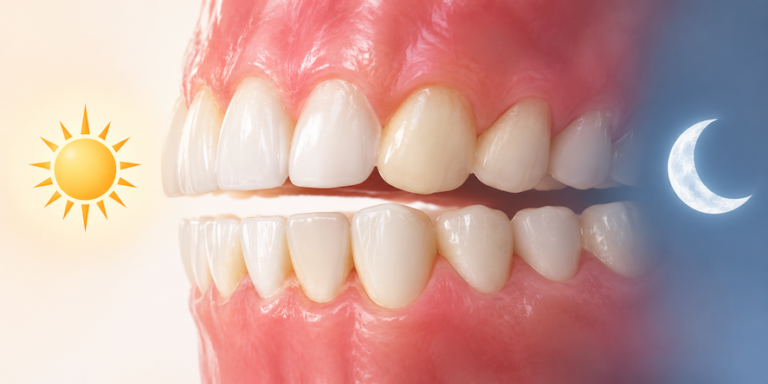
Grinding is the one to watch. Biting an olive pit cracks one tooth, once. Grinding puts heavy force on all your teeth, night after night. So if grinding cracked one tooth, the others are under the same strain. You can see that strain in what grinding does to worn-down teeth.
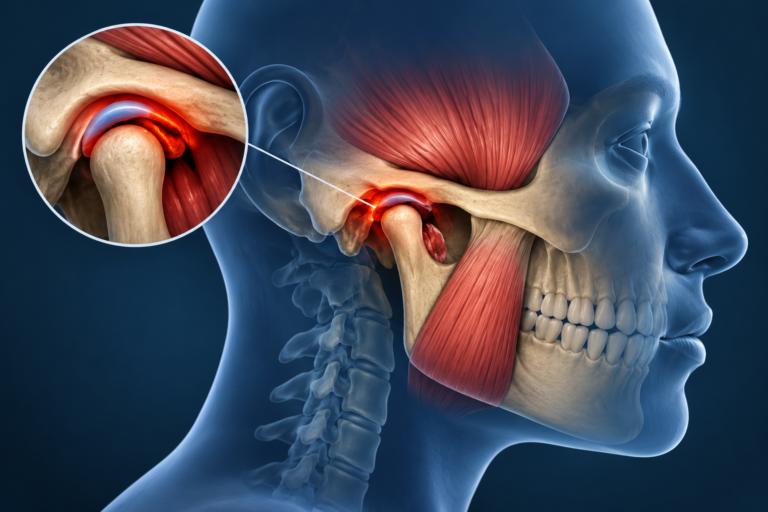
That’s why we look past the cracked tooth. During a TMJ and bite evaluation, we check your teeth, your bite, and your jaw together. That tells us whether the crack was bad luck or a sign of a bigger load.
How do dentists find a crack you can’t see?
Dentists find hidden cracks by bringing back the pain and then looking for the line. It usually takes more than one test, because no single test catches every crack.
Here are the tests dentists use most:
- A bite test. You bite on a small plastic tool, one cusp at a time. If one spot hurts, especially when you let go, that points to the crack.
- A bright light. Shining light through the tooth can show a crack as a line where the light stops.
- A dye. A stain can soak into the crack and make it easier to see.
- A close look. Magnification often shows lines the naked eye misses.
- X-rays and 3D imaging. Regular X-rays often miss cracks, because the line is thin and runs the wrong way. A cone beam CT scan can show changes in the bone around a cracked tooth.
- A gum check. A narrow, deep pocket next to one spot can mean the crack has reached the root.
Sometimes the whole crack only shows up once an old filling comes out. If that happens, we’ll show you what we see before deciding what’s next. You’ll look at the photos and images with us, so the plan makes sense to you.
Can a cracked tooth heal?
A cracked tooth can’t heal on its own. Unlike bone, enamel and dentin don’t grow back together. Without treatment, a crack usually spreads, and it can split the tooth.
The AAE puts it plainly: “Unlike a broken bone, the fracture in a cracked tooth will not heal.” Cleveland Clinic says the same thing, and adds that treatment can often save the tooth.
Cracks also tend to grow. Every bite flexes the crack a little more. The AAE says a cracked tooth that isn’t treated “will progressively worsen, eventually resulting in the loss of the tooth.”
So if the pain fades, don’t take it as good news right away. Sometimes it means the nerve inside is dying. The crack is still there, and bacteria may now have a way in.
How do you fix a cracked tooth?
The fix for a cracked tooth depends on how deep the crack goes and whether the nerve is healthy. A crack caught early often needs only an onlay or a crown. A crack that reaches the nerve needs a root canal too.
Onlay, crown, or root canal: how we decide
| What we find | What we usually recommend | Why |
|---|---|---|
| Craze lines only, with no pain | Nothing, or a polish | They’re in the enamel only and don’t spread like deeper cracks. |
| A crack in one cusp or around an old filling, with a healthy nerve | An onlay | It covers the cusps and holds them together, and it keeps more of your natural tooth than a crown. |
| A crack across more of the tooth, or not much tooth left, with a healthy nerve | A crown | It wraps the whole tooth, so the crack can’t flex when you chew. |
| Pain that lingers after hot or cold, or hurts on its own | A root canal, then a crown or onlay | The nerve is inflamed or infected. The root canal treats it. The crown or onlay holds the tooth together. |
| A crack below the gum line, or a split tooth | Removing the tooth, then an implant or bridge | The tooth can’t be held together anymore. |
We lean toward onlays when they’ll do the job, because they save more healthy tooth. A crown is the stronger choice when the crack runs farther or less of the tooth is left. When the nerve is involved, we handle many root canals here in the office and refer complex cases to an endodontist.
Will it work? Usually. The AAE says that once treated, most cracked teeth “continue to function and provide years of comfortable chewing.” A review in Dentistry Today reported survival rates of 86% to 97% across several studies of cracked teeth treated with a root canal.
No fix comes with a guarantee, though. The AAE notes that a crown “provides maximum protection but does not guarantee success in all cases.” That’s one more reason to deal with the force, not just the tooth.
How do you keep a cracked tooth from getting worse?
Treat the crack, then deal with whatever caused it. Fixing one tooth without asking why it cracked leaves the rest of your teeth at the same risk.
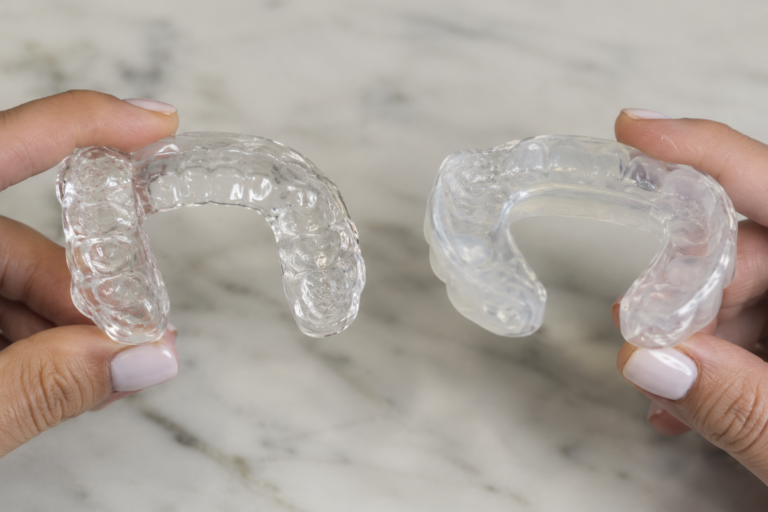
- If you grind or clench, wear a night guard. The AAE suggests asking your dentist about a mouthguard if you grind in your sleep. A custom guard takes the force so your teeth don’t. Here’s how to tell whether you need a night guard or TMJ splint.
- Skip the ice, popcorn kernels, and pens. These are some of the most common ways a tooth cracks in one bite.
- Keep an eye on big old fillings. Large fillings in back teeth are a common starting point for cracks. We check them at your regular visits.
- Wear a mouthguard for contact sports. One hit can crack a tooth that was perfectly healthy.
- Chew on the other side until it’s fixed. That keeps the crack from flexing while you wait.
Is a cracked tooth an emergency?
Most cracked teeth are urgent, not emergencies. Get it checked within days, not months. But Cleveland Clinic notes that “a badly cracked tooth may be a dental emergency.”
Call us right away for emergency dental care if:
- Your face or gums are swelling
- You have a fever along with tooth pain
- The pain is constant or throbbing, or it keeps you up at night
- A piece of the tooth broke off, or the tooth feels loose or in two parts
- You notice a bad taste or pus near the tooth
If swelling spreads toward your eye or neck, or you have trouble breathing or swallowing, go to the emergency room.
Until you’re seen, Cleveland Clinic suggests a few ways to ease the pain:
- Chew on the other side, and avoid hard, chewy, very hot, or very cold food
- Take an over-the-counter pain reliever, as the label directs
- Hold a cold pack on your cheek
- Rinse with warm salt water
None of these fix the crack. They just buy you a little time.
What happens when you come in for pain when biting?
We find the tooth, find the crack, and find out why it happened. Then we show you what we found before we recommend anything.
- We listen. When does it hurt? What sets it off? Do you grind or clench?
- We test. A bite test, a cold test, and a close look at the tooth and gums.
- We image. X-rays, plus 3D imaging when we need a better look.
- We look at it together. You see the photos and images yourself.
- We plan. A fix for the tooth, and a plan for the force behind it.
If one tooth hurts when you bite, don’t wait for it to get worse. Cracks are easier to fix when they’re small. And if you grind or clench, it’s worth knowing what that force is doing to the rest of your mouth. Come in and find out what’s putting that force on your teeth.
Call us at (916) 972-0788. We’re at 1733 Professional Dr in Arden-Arcade, Sacramento.
Frequently asked questions about cracked teeth
Can a cracked tooth heal on its own?
No. Enamel and dentin can’t grow back together the way bone does. The American Association of Endodontists says a crack in a tooth “will not heal.” Without treatment, most cracks spread over time. An onlay, crown, or root canal can stop the crack from flexing and save the tooth.
How long can you leave a cracked tooth?
Not long. There’s no safe waiting period, because every bite can push the crack deeper. A crack caught early may need only an onlay or crown. One left for months can reach the nerve or split the tooth. If a tooth hurts when you bite, get it checked within days or weeks.
Why does only one tooth hurt when I bite down?
Pain in one tooth usually points to that tooth. A crack, a cavity, or a filling that sits too high are the most common reasons. When several teeth hurt at once, sinus pressure or grinding is more likely. A dentist can test each tooth to find the source.
How can I stop my tooth from hurting when I bite down?
For now, chew on the other side and skip hard or chewy food. An over-the-counter pain reliever, used as the label directs, can help. Those steps only ease the pain, though. The cause still needs a fix, whether it’s a crack, a cavity, a high filling, or an infection.
What are micro cracks in a tooth?
Micro cracks, also called craze lines, are tiny lines in the outer enamel. Most adults have a few. The AAE says they’re shallow, cause no pain, and are only a cosmetic concern. If a line hurts when you bite, it’s likely deeper than a craze line, so have it checked.
Can grinding your teeth crack them?
Yes. Grinding and clenching put heavy force on your teeth, often every night. A 2025 review in Frontiers in Oral Health lists clenching and grinding as a factor that raises the chance of cracks. If grinding cracked one tooth, the rest are under the same load, so protecting them matters too.
Why didn’t my crack show up on an X-ray?
Most cracks are very thin, and they often run in a direction X-rays can’t catch. That’s why dentists use a bite test, a bright light, dye, and a close look to find them. 3D imaging can also show changes in the bone around a cracked tooth.
Do you always need a root canal for a cracked tooth?
No. If the nerve is healthy, an onlay or crown is often enough. A root canal is needed when the crack has reached the nerve. Signs include pain that lingers after cold, pain that starts on its own, or swelling. Finding the crack early makes a root canal less likely.
Is an onlay or a crown better for a cracked tooth?
It depends on the crack. An onlay covers the chewing cusps and keeps more of your natural tooth. It works well for a crack in one cusp or around an old filling. A crown covers the whole tooth, and it’s the stronger choice when the crack runs farther or less tooth is left.
Will a night guard keep a cracked tooth from getting worse?
A night guard can’t fix a crack. It can protect your teeth from the grinding that often causes cracks. The AAE suggests asking your dentist about a mouthguard if you grind in your sleep. The cracked tooth itself still needs an onlay or crown to keep it from flexing.
Can a cracked tooth get infected?
Yes. A deep crack gives bacteria a path to the nerve inside the tooth. The AAE says extensive cracks can lead to an infection that “can spread to the bone and gum.” Signs include throbbing pain, swelling, a bad taste, or a pimple on the gum. Call us right away if you notice them.
Sources
- American Association of Endodontists. Cracked Teeth. https://www.aae.org/patients/dental-symptoms/cracked-teeth/
- Cleveland Clinic. Cracked Tooth (Fractured Tooth). Last updated April 29, 2024. https://my.clevelandclinic.org/health/diseases/21628-fractured-tooth-cracked-tooth
- Raj S, Singh A. Cracked tooth syndrome: a diagnostic dilemma, a mini review. Frontiers in Oral Health, 2025;6:1572665. https://www.frontiersin.org/journals/oral-health/articles/10.3389/froh.2025.1572665/full
- Krell KV, Davis MC. Cracked Teeth Are Worth Saving: A Look at New Management Protocols and Outcomes. Dentistry Today. https://dentistrytoday.com/?p=61570
Medical disclaimer: This article is for general information and does not replace an examination and diagnosis by a licensed dentist. Individual results vary.