
Quick check: are your teeth touching right now? If they are, and you aren’t chewing or swallowing, you’re probably clenching. A relaxed jaw keeps the teeth slightly apart.
How you stop clenching your jaw depends on when it happens. Daytime clenching is a habit, so you can train yourself out of it. Nighttime clenching happens in your sleep, so you can’t just decide to stop. At night, the goal is to protect your teeth and find out what’s driving it.
The medical name for clenching and grinding is bruxism. The National Institute of Dental and Craniofacial Research (NIDCR) says it can happen awake or asleep, and that the daytime kind is more common. This guide takes them one at a time, because the fixes are different.
Why do I clench my jaw?
Most daytime clenching comes from stress and focus. Mayo Clinic says awake clenching may come from anxiety, stress, anger, frustration, or tension. Think of the jaw you set in traffic, over a hard email, or during a heavy lift.
Night clenching works differently. Mayo Clinic describes it as a sleep-related chewing activity linked to brief disturbances during sleep. In plain words, it happens when your sleep gets stirred up for a moment. You aren’t choosing to do it.
A few other things make clenching more likely, day or night:
- Caffeine and alcohol, according to NIDCR
- Smoking
- Some medicines for depression, seizures, and ADHD
- Family history, since sleep clenching tends to run in families
- Sleep apnea, which Cleveland Clinic says is linked to grinding, though it isn’t clear which one causes the other
Did your jaw get sore around the time you started a new medicine? Tell the doctor who prescribed it. Don’t stop taking it on your own.
What’s the difference between daytime and nighttime clenching?
Daytime clenching is something you can notice and change. Nighttime clenching happens without you knowing, so you manage it instead of controlling it. The Leeds Teaching Hospitals NHS guide puts it plainly: with practice you can stop awake clenching, but you have no control over sleep clenching.
| Daytime clenching | Nighttime clenching | |
|---|---|---|
| When it happens | While you’re awake, often during stress, focus, or effort | While you’re asleep |
| Do you notice it? | Not at first, but you can learn to | No. A partner may hear it, or you wake up sore |
| Common triggers | Stress, anxiety, concentration, tension | Brief sleep disturbances, evening caffeine or alcohol, some medicines |
| What helps most | A relaxed jaw position, reminders, and a stress outlet | A custom night guard, better evening habits, and a sleep check |
| Who can help | You, with tips from your dentist | Your dentist, plus a physician if sleep apnea is a concern |
How do I know if I’m clenching my jaw?
The most common signs are a sore or tight jaw, a dull headache at your temples, and teeth that look flat or chipped. You may never catch the clenching itself, especially at night. Here’s what Mayo Clinic and Cleveland Clinic list:
- A jaw that feels tired, tight, or sore, often in the morning
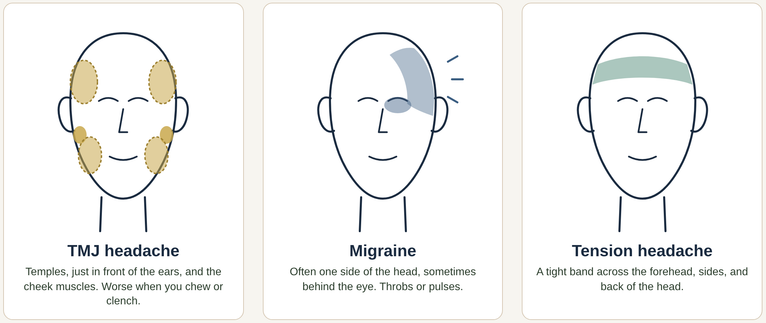
- A dull headache that starts at your temples
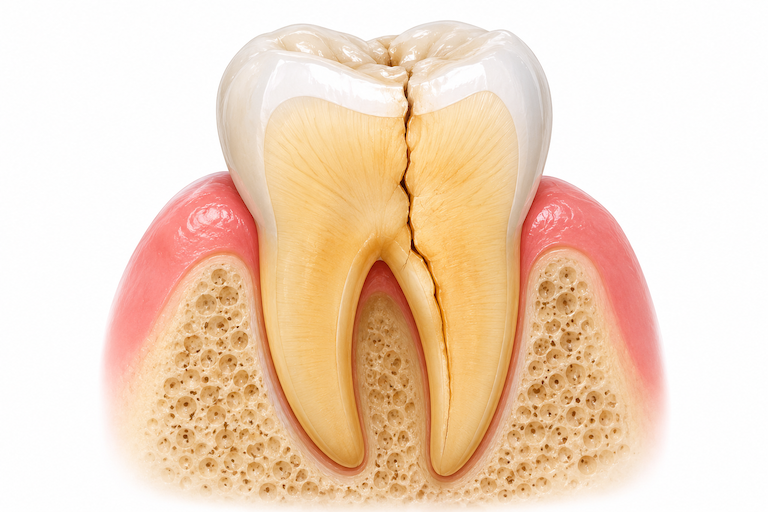
- Teeth that look flat, chipped, or cracked, or that feel loose
- Earaches
- Pain when you eat, or trouble opening your mouth all the way
- A partner who hears you grinding at night
Daytime clenchers often catch themselves once they start looking. Night clenchers usually find out from a partner, a sore jaw, or a dentist who spots the wear.
How do you stop clenching your jaw during the day?
Teach your jaw a new resting position, then use reminders until it sticks. NIDCR lists changing the resting position of your mouth and jaw as one way to cut down on clenching. Here’s how to do it:
- Learn the resting position. Lips together, teeth apart, jaw loose. The Leeds NHS guide says to keep your jaw muscles relaxed and your teeth slightly apart.
- Set reminders. Use a phone alarm every hour or two, or put a small sticker on your screen or dashboard. Each time you see it, check your teeth and let them part.
- Tie the check to things you already do. Red lights, opening email, sitting down at your desk, and the start of a workout set all make good cues.
- Ask someone to tell you. Family or coworkers can point it out when they see your jaw set.
- Drop the chewing habits. Gum and chewing on pens keep your jaw muscles working all day.
- Give stress somewhere else to go. Mayo Clinic and NIDCR both suggest exercise, yoga, meditation, or counseling.
- Ask about biofeedback if habits don’t stick. Mayo Clinic says it uses monitoring equipment to teach you to control your jaw muscles.
This takes practice. The reminders do the work until the relaxed position starts to feel normal.
How do you stop clenching your jaw at night?
You can’t stop night clenching with willpower, because you’re asleep when it happens. What you can do is protect your teeth, cut back on what makes it worse, and check whether your sleep is part of the problem.
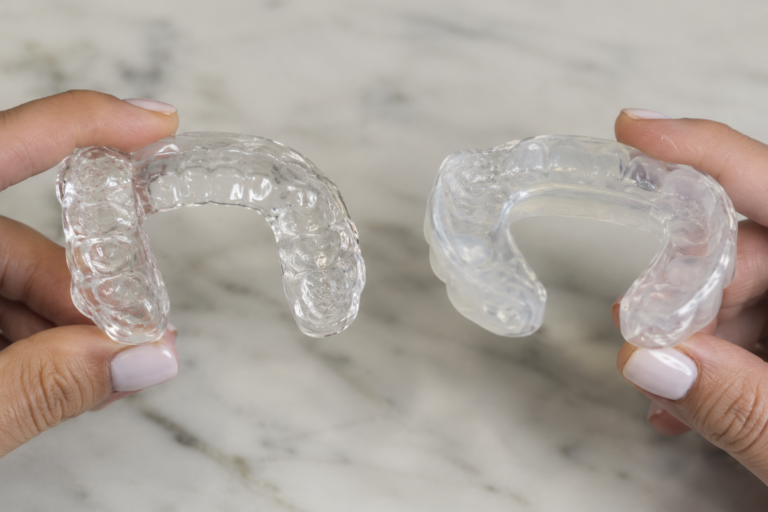
- Protect your teeth with a night guard. A custom guard keeps your top and bottom teeth apart while you sleep. See Night Guard vs TMJ Splint for which one fits you.
- Skip caffeine after dinner. Mayo Clinic says coffee and tea in the evening may make clenching worse.
- Go easy on alcohol at night. It can have the same effect.
- Cut back on smoking, or quit. NIDCR lists smoking as a risk factor.
- Wind down before bed. The same stress tools that help during the day help at night.
- Review your medicines with your doctor. Some medicines for depression, seizures, and ADHD can raise the chance of clenching.
- Get your sleep checked if you snore or wake up tired. Mayo Clinic says treating sleep problems such as sleep apnea may help sleep clenching get better.
Your daytime habits help here too. If your teeth stay apart all day, your jaw muscles start the night less worn out.
Does a night guard stop clenching?
No. A night guard doesn’t stop you from clenching. It takes the force so your teeth don’t. NIDCR says a mouth guard may reduce muscle activity from clenching and grinding, which can ease a sore jaw.
The type of guard matters. The Leeds NHS guide notes that some people clench or grind more with a soft guard, which can make jaw pain worse. That’s one reason we make hard, custom guards that fit your bite. A drugstore boil-and-bite guard can work for a short time, but it’s soft and made to fit everyone.
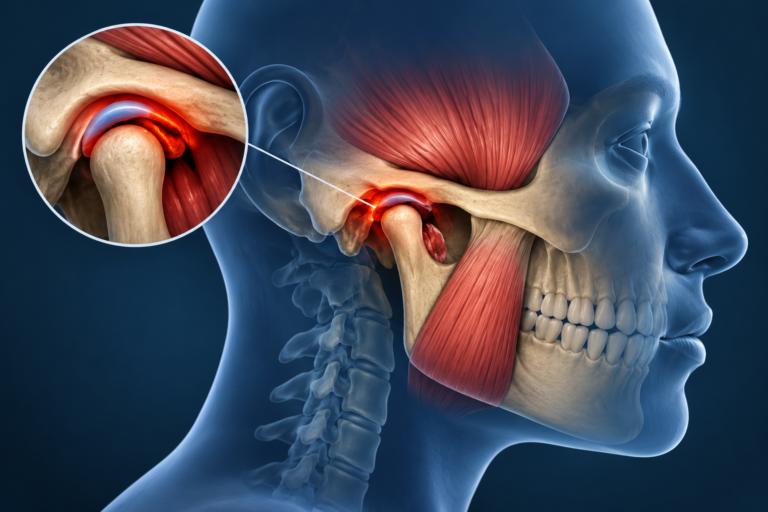
If the jaw joint itself hurts, you may need a TMJ splint instead. It looks similar but does a different job. We explain the difference in Night Guard vs TMJ Splint.
Can stress or anxiety cause jaw clenching and jaw pain?
Yes. Stress and anxiety are among the most common reasons people clench during the day, and hours of clenching can leave your jaw muscles sore. Mayo Clinic says extra anxiety or stress can lead to clenching and grinding. Cleveland Clinic adds that anxiety disorders and depression raise the risk.
When stress is the driver, your jaw is a signal, not the whole problem. Exercise, relaxation, or talking with a counselor can help your jaw as much as anything we do in the chair.
Jaw pain that has lasted for months is a different story. In that case, we may refer you to an orofacial pain specialist. That’s the dental specialty that focuses on long-term jaw and face pain.
Is clenching at night a sign of sleep apnea?
Not always, but the two can be connected. Cleveland Clinic says research has confirmed a link between sleep apnea and teeth grinding, but it isn’t clear which one causes the other. Night clenching is worth a sleep conversation if it comes with any of these:
- Loud snoring, or pauses in breathing that a partner notices
- Morning headaches
- Waking up tired after a full night in bed
- A dry mouth most mornings
Sleep apnea often goes unnoticed for years. We cover why in Undiagnosed Sleep Apnea. We look at airway and sleep as part of every exam, and our sleep apnea evaluation is the next step if the signs are there.
What does clenching do to your teeth?
Over time, clenching can flatten, chip, crack, or loosen teeth, and it can break fillings and crowns. Johns Hopkins Medicine notes that people can clench with up to 250 pounds of force, even in their sleep. That’s why worn-down teeth and cracked molars so often lead back to clenching.
Dr. Tex puts it simply: most dental problems come from bacteria or force. Clenching is force.
When should you see a dentist about jaw clenching?
See a dentist if your jaw is sore most mornings, your teeth are changing, or the daytime habits aren’t helping. Mayo Clinic advises seeing your dentist if you have signs that could come from clenching or grinding. Watch for these:
- Your jaw is sore or tight when you wake up
- Your teeth look shorter, flatter, chipped, or cracked
- A filling or crown has broken
- Your jaw clicks, catches, or won’t open all the way
- Headaches at your temples keep coming back
- A partner hears you grinding at night
What happens at a TMJ and bite evaluation?
We look at the whole picture: your jaw muscles and joints, the wear on your teeth, your bite, and your sleep. You see what we see before we recommend anything. If a night guard makes sense, we’ll talk it through. If something else is driving the clenching, we’ll tell you who can help.
If clenching is wearing on your jaw or your teeth, find out where it’s coming from. We’re in Arden-Arcade at 1733 Professional Dr, Sacramento, CA 95825. Call us at (916) 972-0788.
Frequently asked questions about jaw clenching
How do I stop unconsciously clenching my jaw?
Start by learning to notice it. Set phone reminders or put stickers where you’ll see them. Each time, check your jaw: lips together, teeth slightly apart, muscles loose. Asking family or coworkers to point it out helps too. With practice, the relaxed position starts to feel normal.
Why do I clench my jaw so hard when I sleep?
Sleep clenching isn’t something you choose. Mayo Clinic describes it as a sleep-related chewing activity linked to brief disturbances during sleep. Evening caffeine or alcohol, smoking, and some medicines can make it worse. Cleveland Clinic notes it can do more harm than daytime clenching, because you don’t notice it.
What is jaw clenching a symptom of?
During the day, it’s most often a sign of stress, anxiety, or deep focus. At night, it’s tied to brief disturbances in sleep. It can also be a side effect of some medicines, and it has been linked to sleep apnea. Clenching alone doesn’t tell you which one applies, so it’s worth a look.
Can anxiety cause jaw clenching?
Yes. Mayo Clinic lists anxiety and stress as common reasons people clench during the day, and Cleveland Clinic says anxiety disorders raise the risk. Hours of clenching can tire your jaw muscles and leave them sore. Managing the stress often helps the jaw as much as dental treatment does.
Is jaw clenching a sign of ADHD?
Not by itself. Clenching has many causes and isn’t a sign of any one condition. NIDCR does list some ADHD medicines, along with some medicines for depression and seizures, as things that may raise the chance of clenching. If it started with a new prescription, talk to the doctor who prescribed it.
What deficiency causes jaw clenching?
NIDCR, Mayo Clinic, and Cleveland Clinic don’t list any vitamin or mineral deficiency as a cause of clenching. The causes they name are stress and anxiety, sleep-related factors, caffeine, alcohol, smoking, some medicines, and genes. If you’re thinking about supplements, ask your doctor before you start.
How do you relax a clenched jaw?
Let your teeth come apart, keep your lips lightly closed, and let your jaw muscles go loose. Drop your shoulders and take a slow breath. Repeat it every time a reminder goes off. If your jaw stays sore for more than a couple of weeks, have a dentist check it.
Does a night guard stop clenching?
No. A night guard protects your teeth from the force of clenching, but it doesn’t stop the habit. NIDCR says a mouth guard may reduce muscle activity from clenching and grinding. A hard, custom guard fits your bite, and some people find they clench more on a soft one.
Can clenching your jaw cause headaches?
Yes. Mayo Clinic lists a dull headache that starts at your temples as a sign of clenching and grinding, and tension-type headaches as a possible result. If you wake up with headaches often, ask about your sleep too. Morning headaches can have other causes, including sleep problems.
Is clenching the same as grinding?
They’re two forms of the same condition, called bruxism. Clenching is pressing your teeth together hard. Grinding is sliding them back and forth. NIDCR says bruxism can happen while you’re awake or asleep. You can do one or both, and a dentist can often see the signs of either on your teeth.
Should my teeth touch when my mouth is closed?
Not when you’re resting. A relaxed jaw has the lips closed and the teeth slightly apart. The Leeds Teaching Hospitals NHS guide gives the same advice: keep your jaw muscles relaxed and your teeth slightly apart. If your teeth touch most of the time, you may be clenching.
Sources
- National Institute of Dental and Craniofacial Research. Bruxism. Last reviewed March 2025.
- Mayo Clinic. Teeth grinding (bruxism): Symptoms and causes. December 27, 2024.
- Mayo Clinic. Teeth grinding (bruxism): Diagnosis and treatment. December 27, 2024.
- Cleveland Clinic. Bruxism (Teeth Grinding). Last updated December 18, 2023.
- Johns Hopkins Medicine. Bruxism.
- Leeds Teaching Hospitals NHS Trust. Clenching and grinding your teeth (bruxism). Last reviewed March 19, 2026.
Medical disclaimer: This article is for general information and does not replace an examination and diagnosis by a licensed dentist. Individual results vary.